
Gym Pain or Real Injury? How to Know When to See a Physiotherapist
Learn the difference between normal post-workout soreness and real injury. Get expert physiotherapy advice, recovery tips, and prevent gym injuries at Movemend, Pitampura.
Movemend - Best Physiotherapy Clinic (Sports Injury and Rehab Centre) in pitampura
5/23/20263 min read

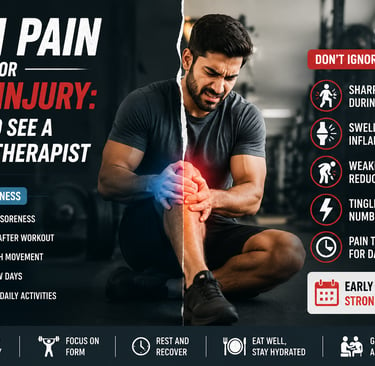
Gym Pain or Real Injury: When to See a Physiotherapist
Imagine this: you’re in the middle of a bench press, and suddenly your shoulder gives a sharp jolt. Or you finish squats, and there’s a nagging ache behind your knee that doesn’t go away. Maybe your lower back feels unusually tight after deadlifts. It’s normal to wonder—should you keep going, rest for a day, or see a professional
Understanding the difference between ordinary post-workout soreness and a genuine injury is crucial. Ignoring warning signs or self-diagnosing based on what someone else says can turn a minor issue into a long-term problem
When you push your body, muscles naturally respond with some discomfort. After trying a new exercise, increasing weights, or performing more reps than usual, your muscles may feel heavy, stiff, or mildly sore. This sensation often appears a day or two after your workout, improves as you move, and usually fades in a few days. It doesn’t stop you from walking, climbing stairs, or doing daily tasks. Staying hydrated, eating well, and sleeping enough allows your muscles to recover naturally.
However, not all discomfort is harmless. If you feel sharp pain while exercising, notice swelling, warmth, or redness around a joint, or experience weakness or reduced mobility, it could be a sign of injury. Tingling or numbness is another warning that nerve involvement might be present. Ignoring these signs can worsen the injury and prolong recovery.
Different exercises can lead to specific injuries. Shoulder pain during pressing movements may indicate overstressed tendons or a strain in stabilizing muscles, often caused by lifting too quickly, poor form, or skipping the warm-up. Knee discomfort during squats can stem from tendon irritation, ligament strain, or meniscus stress, especially if your knees collapse inward or your weight distribution is uneven. Lower back tightness after deadlifts could result from muscle strain or spinal pressure if your core is weak or posture is off. Even elbow pain during curls could signal tendon overuse from improper grip or uncontrolled movement. Continuing these exercises without adjusting form or seeking evaluation increases the risk of a serious injury.
The “push through pain” mentality often makes matters worse. Muscle fatigue is part of growth, but real injury pain should never be ignored. Minor strains can become chronic, recovery time can extend to weeks or months, and joints or tendons may suffer permanent damage. Athletes and regular gym-goers who address small problems early stay consistent and progress faster than those who ignore pain.
Visiting a professional physiotherapist ensures you receive the right care. Experts assess your movement, identify the root cause of pain—which may not always be where the discomfort is felt—and create a plan tailored for you. Treatment may include hands-on therapy, corrective exercises, advanced techniques like ultrasound or electrical stimulation, and even cupping therapy to relieve tension and improve circulation. A structured plan with a clear timeline ensures you can return to training safely without reinjuring yourself.
If you’re unsure whether your pain is normal or a problem, try a few simple self-checks. Compare the affected side with the opposite side of your body, see if you can move the joint through its full range, test if you can comfortably bear weight, and notice whether pain worsens after waking. Any abnormalities in these checks mean it’s time to see a professional.
Preventing injuries is just as important as treating them. Always warm up before every workout, increase weights gradually, focus on correct technique rather than lifting the heaviest weight possible, allow your muscles time to rest, strengthen weak areas, and pay attention to your body’s signals. Even periodic movement assessments with a physiotherapist can catch potential issues before they become serious.
Rest and nutrition play a critical role in injury prevention. Muscles grow and repair during recovery, not during the workout itself. Quality sleep of 7–9 hours each night, proper hydration, and adequate protein intake help muscles repair efficiently. Ignoring rest or pushing through discomfort increases the risk of injury, reduces performance, and extends recovery time.
Listening to your body’s subtle signals is essential. Pain that worsens in the morning, stiffness that doesn’t improve with light activity, or swelling and instability in joints are all signs that professional evaluation is needed. Taking a conservative approach early on—stopping the exercise, seeking guidance, and following a structured recovery plan—is far safer than risking long-term damage.
In summary, if you are questioning whether your discomfort is an injury, don’t wait or guess. Early consultation with a qualified physiotherapist ensures faster recovery, prevents chronic issues, and keeps you consistent in training. At Movemend, advanced physiotherapy, chiropractic care, and muscle recovery techniques work together to get you back to your workouts stronger and healthier. You can continue training hard while staying safe; with proper guidance, both are possible.
Understanding your body, respecting pain signals, correcting your technique, and addressing issues early are keys to consistent progress. Training safely is not about avoiding challenges—it’s about challenging your body intelligently and building strength without compromising long-term health. Consistency, recovery, and mindful training are what ultimately lead to lasting results.
Whether you are lifting, running, or playing a sport, knowing when to seek help, adjusting your training, and following a professional plan ensures your fitness journey is sustainable. Early action today can prevent months of setbacks tomorrow.