
How Physiotherapy Helps Prevent Sports Injuries in Amateur Athletes
Discover how physiotherapy helps amateur athletes prevent sports injuries, improve strength, mobility, recovery, and stay active with expert care.
Movemend - Best Physiotherapy Clinic (Sports Injury and Rehab Centre) in pitampura
6/27/20264 min read
How Physiotherapy Helps Prevent Sports Injuries in Amateur Athletes
Sports injuries are not limited to professional players. Amateur athletes, weekend runners, gym beginners, school players, and fitness enthusiasts all face a real risk of strains, sprains, overuse injuries, and poor recovery habits. The good news is that physiotherapy can play a major role in preventing these problems before they become serious.
At Movemend - Best Physiotherapy Clinic (Sports Injury and Rehab Centre) in Pitampura, the focus is not only on treating pain but also on helping people move better, train smarter, and stay active for longer. Preventive physiotherapy is especially useful for amateur athletes because many of them train without enough guidance, push too hard too soon, or ignore early warning signs from the body.
Why amateur athletes get injured
Amateur athletes often begin training with enthusiasm but without proper preparation. They may skip warm-ups, use incorrect technique, wear unsuitable shoes, or increase their training load too quickly. These habits can put extra stress on muscles, joints, tendons, and ligaments.
Unlike professional athletes, amateurs usually do not have daily access to coaches, trainers, or recovery support. As a result, small issues often go unnoticed until pain becomes strong enough to affect performance. Physiotherapy helps identify these risks early and correct them with practical solutions.
Role of physiotherapy in prevention
Physiotherapy is not only for recovery after injury. It also works as a preventive tool by improving movement quality, strength, flexibility, balance, coordination, and body awareness. A physiotherapist can assess how an athlete moves, identify weak areas, and design a plan to reduce the chance of injury.
This is especially important for people who repeat the same movements again and again, such as runners, badminton players, cricketers, footballers, and gym users. When certain muscles are weak or tight, the body compensates in unhealthy ways. Over time, that can lead to pain or injury.
Movement assessment matters
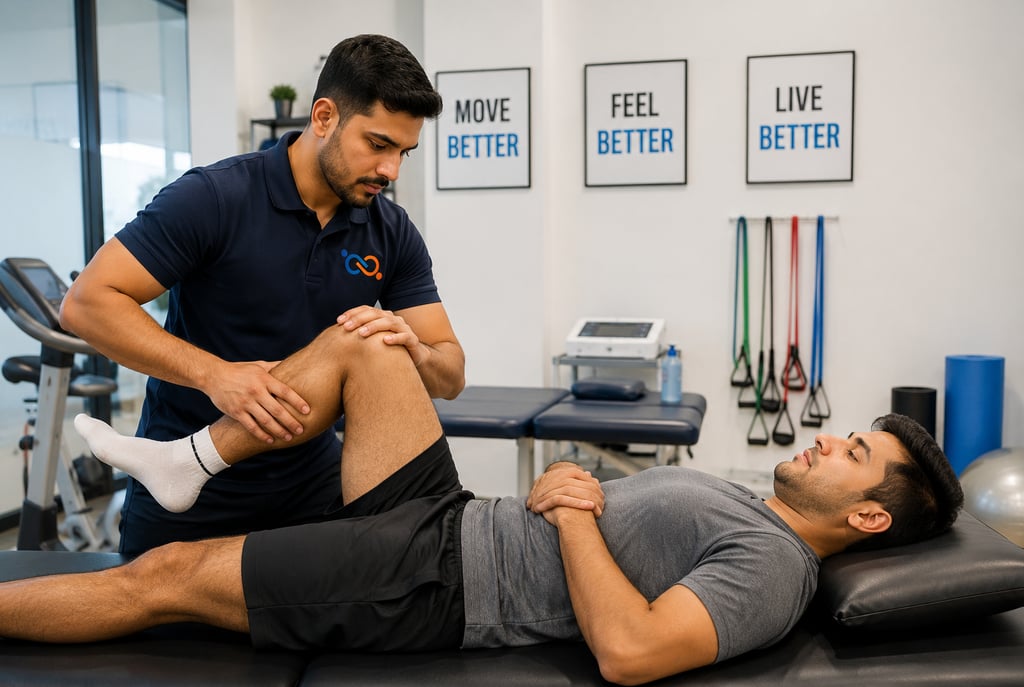
One of the first steps in preventive physiotherapy is a movement assessment. This helps check posture, joint mobility, muscle balance, walking pattern, running style, squatting technique, and functional stability. Even a small movement flaw can increase injury risk if it continues for weeks or months.
For example, weak hips may affect knee alignment during running or jumping. Poor ankle control may increase the risk of sprains. Tight hamstrings or limited shoulder mobility may reduce performance and increase strain in other body parts. A physiotherapist looks at the full picture, not just the painful area.
Strength and stability training
A major part of injury prevention is building strength in the right muscles. Strong muscles support the joints and absorb impact during sports. Physiotherapy programs often include core exercises, glute strengthening, lower-limb stability work, shoulder control drills, and balance exercises.
Stability training is just as important as strength. An athlete may have enough power but still lack control during quick movements, landings, turns, or sudden stops. Physiotherapy trains the body to stay aligned and controlled under pressure, which lowers the chance of injury.
Flexibility and mobility work
Tight muscles and stiff joints can change how the body moves during sports. This creates extra stress on surrounding tissues and may lead to overuse injuries. Physiotherapy includes stretching and mobility work that target the specific areas that need improvement.
The goal is not just to become more flexible for the sake of it. The goal is to move efficiently. When mobility improves, athletes often notice better technique, smoother movement, and less discomfort during play. That can make sports feel easier and safer at the same time.
Warm-up and cool-down guidance
Many amateur athletes either skip warm-ups or do them too quickly. A proper warm-up prepares the body for activity by increasing blood flow, activating muscles, and improving coordination. Physiotherapists can guide athletes on how to warm up in a way that suits their specific sport.
Cool-down routines also matter. Gentle movement, stretching, and breathing exercises can help the body transition out of activity more smoothly. While cool-downs do not magically prevent every injury, they support recovery and reduce excessive stiffness after training.
Load management and recovery
One of the biggest causes of sports injury is doing too much too soon. This is common in people who suddenly increase running distance, gym weight, training frequency, or match intensity. Physiotherapy helps with load management, which means balancing effort and recovery in a smart way.
A physiotherapist can help an athlete understand how much training is appropriate, how to progress gradually, and when to rest. Recovery advice may also include sleep habits, hydration, basic mobility work, and pain monitoring. These small habits can make a big difference over time.
Common injuries that can be prevented
Preventive physiotherapy is useful for many common sports-related problems, including ankle sprains, knee pain, hamstring strains, shoulder strain, lower back pain, and tendon overuse issues. Many of these conditions start as mild irritation before becoming full injuries.
If an athlete notices repeated tightness, weakness, clicking, instability, or discomfort during sport, it should not be ignored. Early physiotherapy support can reduce the chance of long-term trouble and help the athlete stay active with less interruption.
Why early care saves time
Many people wait until pain becomes severe before seeking help. In sports, that delay often leads to longer recovery time and more missed training sessions. Early physiotherapy is usually simpler, faster, and more effective than waiting for a full injury to develop.
For amateur athletes especially, prevention is often easier than rehabilitation. A few targeted sessions can improve movement, reduce strain, and build better habits. That can save time, money, and frustration later.
How Movemend supports athletes
At Movemend - Best Physiotherapy Clinic (Sports Injury and Rehab Centre) in Pitampura, athletes can receive personalized physiotherapy support based on their body, sport, and training level. The clinic approach is useful for people who want to recover from pain and also reduce the risk of it coming back.
For active people in Delhi, this kind of care is valuable because sports, fitness, and daily movement all place repeated stress on the body. A preventive plan can help amateur athletes stay consistent with training while moving with more confidence and control.