
Squat-Related Knee Pain: Causes, Recovery & Safe Rehab Guide for Pain-Free Training
This detailed guide explains everything about knee pain caused by squats, including the main reasons behind it such as poor form, muscle imbalance, overloading, and mobility issues. It also covers early warning signs, smart recovery strategies, and step-by-step rehabilitation methods to safely return to training. You’ll learn how to reduce pain, improve mobility, strengthen supporting muscles, and prevent future injuries. Whether you are a beginner or an advanced lifter, this guide will help you understand how to manage knee pain effectively and get back to squatting safely and confidently.
Movemend - Best Physiotherapy Clinic (Sports Injury and Rehab Centre) in pitampura
5/1/20265 min read
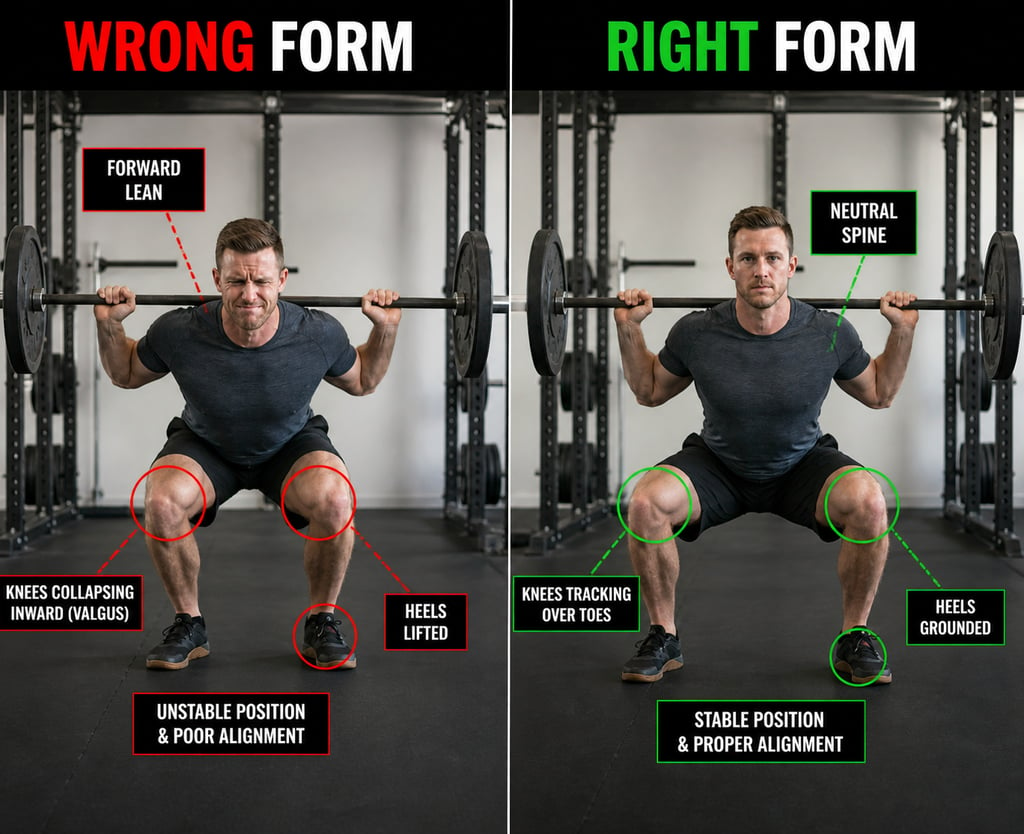
Squat Gone Wrong: Knee Pain and How to Rehab It – Why You Need to Address It Quickly
Knee pain is one of the most common issues faced by people who squat regularly, whether they are beginners or advanced lifters. It often appears suddenly after a heavy leg day or slowly builds up over time due to repeated stress. One moment you are progressing in the gym, improving strength and confidence, and the next moment you are dealing with pain, stiffness, or discomfort that affects even simple movements like walking or climbing stairs.
The important thing to understand is that knee pain during or after squats is not something to ignore. It is a signal from your body that something is not functioning correctly—whether it is your technique, mobility, muscle balance, or training load. If addressed early, most knee issues can be improved significantly without long-term damage. However, if ignored, they can develop into chronic problems that may require long recovery periods.
Why Knee Pain Happens During Squats
Squats are a compound movement that involves multiple joints and muscle groups working together. When performed correctly, the load is shared between the hips, glutes, hamstrings, and knees. But when something is off, the knees start taking more stress than they are designed to handle.
One of the most common reasons is poor squat form. If your knees cave inward during the movement (known as valgus collapse), it increases pressure on the knee joint. Similarly, if your heels lift off the ground, your weight shifts forward, forcing the knees to absorb extra load.
Another major reason is muscle imbalance. Weak glutes and hamstrings often fail to support the movement properly, which forces the quadriceps and knee joint to compensate. Over time, this leads to irritation, inflammation, and pain.
A third common reason is lifting too heavy too soon. Progressive overload is essential for strength gains, but when weight is increased faster than your body can adapt, the knee joint becomes overloaded. This can start as mild discomfort but may quickly turn into sharp pain if training continues without correction.
Other contributing factors include poor ankle mobility, lack of warm-up, improper depth control, and fatigue from overtraining.
Early Warning Signs You Should Not Ignore
Knee pain rarely starts as a major injury. In most cases, it begins with small signs that are often ignored. These include mild discomfort during squats, tightness around the knee after workouts, or slight pain when going up or down stairs.
As the condition worsens, symptoms may include sharp pain during movement, swelling around the joint, reduced range of motion, or instability in the knee.
If pain continues for more than a few days or affects daily activities, it should not be considered normal soreness. Early action is always better than waiting for the condition to get worse.
Smart Recovery Approach for Knee Pain
The first step in recovery is reducing stress on the knee joint. This does not mean complete rest in every case, but it does mean stopping heavy squats and avoiding movements that trigger pain.
During the initial stage, focus on gentle movement and controlled activity. Light walking or cycling can help maintain blood flow without putting excessive strain on the knee.
If there is swelling or inflammation, applying ice for short periods can help reduce discomfort. Elevating the leg while resting can also assist in reducing fluid buildup around the joint.
At this stage, the goal is not to build strength but to allow the knee to calm down and recover from irritation.
Rebuilding Strength Gradually
Once sharp pain starts reducing, the next phase is reintroducing movement and rebuilding strength in a controlled manner.
Start with simple, pain-free exercises such as:
Bodyweight box squats with limited depth
Glute bridges to activate the posterior chain
Straight leg raises to strengthen the quadriceps
Step-ups on a low platform
These exercises help re-engage the muscles around the knee without placing heavy load on the joint.
Strengthening the glutes and hamstrings is especially important because they play a major role in stabilizing the knee during squats. Weak supporting muscles are one of the most common reasons for recurring knee pain.
It is important to move slowly and focus on proper control rather than speed or intensity.
Mobility Work – A Key Part of Recovery
Mobility plays a major role in both recovery and prevention of knee pain, but it is often ignored.
Poor ankle mobility is one of the biggest contributors to bad squat mechanics. If the ankle cannot move properly, the knees are forced to compensate, which increases stress on the joint. Simple ankle mobility drills and calf stretching can significantly improve movement quality.
Hip mobility is equally important. Tight hips can restrict squat depth and force the knees to take additional load. Regular hip flexor stretching and mobility drills help restore natural movement patterns.
Foam rolling the calves, thighs, and IT band can also help reduce tightness and improve flexibility around the knee area.
Returning to Squats Safely
Returning to squats should always be a gradual process. Jumping back into heavy lifting too early is one of the main reasons knee pain returns.
Start with bodyweight squats and focus on perfect form. Once this feels comfortable, progress to goblet squats with light weight. Slowly increase depth and load only if there is no pain during or after exercise.
Key principles to follow include:
Controlled movement at all times
Proper alignment of knees and toes
No sharp pain during exercise
Gradual progression in weight and volume
The knee should first tolerate movement before being exposed to heavy resistance.
Normal Soreness vs Serious Injury
It is important to differentiate between normal muscle soreness and injury-related pain.
Normal soreness (DOMS) usually appears 12–48 hours after training, feels dull or tight, and improves within a few days. It is a natural response to training.
In contrast, injury-related pain is often sharp, localized around the joint, and may worsen with movement. Swelling, instability, or pain lasting more than a few days should not be ignored and may require professional evaluation.
Long-Term Prevention Strategy
Once recovery is complete, prevention becomes the most important focus. Knee pain often returns if underlying issues are not corrected.
To prevent future problems:
Maintain proper squat form consistently
Strengthen glutes, hamstrings, and quads evenly
Improve ankle and hip mobility regularly
Avoid sudden jumps in training load
Warm up properly before every leg workout
Consistency in these habits ensures better joint health and long-term performance.
Conclusion
Knee pain after squats is not just a temporary discomfort—it is a warning sign that something in your movement or training needs attention. Ignoring it or pushing through pain often leads to longer recovery times and more serious issues.
The best approach is to reduce stress, allow proper healing, rebuild strength gradually, and return to training with better technique and awareness. When managed correctly, knee pain can actually become an opportunity to improve your form, strengthen weak muscles, and build a more efficient and injury-free squat pattern.
Taking the time to recover properly is always better than risking long-term damage. Your knees play a crucial role in all lower body movements, and protecting them ensures consistent progress in your fitness journey.