
Tennis Elbow (Lateral Epicondylitis): Complete Guide to Treatment & Recovery in Delhi
Tennis elbow pain on the outside of your elbow? Learn 5 best exercises, treatment options, and when to see a physiotherapist. Complete recovery guide for Delhi patients. Book at MoveMend Physiotherapy Pitampura.
Movemend - Best Physiotherapy Clinic (Sports Injury and Rehab Centre) in pitampura
6/19/20265 min read

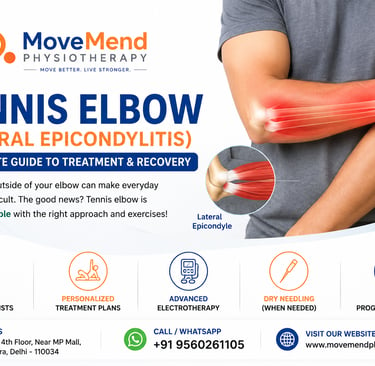
Tennis Elbow (Lateral Epicondylitis): Complete Guide to Treatment & Recovery
Tennis elbow isn't just for tennis players. If you're feeling pain on the outside of your elbow, especially when gripping, lifting, typing, or doing any repetitive arm work, you might have lateral epicondylitis — commonly known as tennis elbow. This condition affects thousands of people in Delhi every year, from office workers to gym enthusiasts to athletes.
In this comprehensive guide, you'll learn everything about tennis elbow: what causes it, how to identify symptoms, the best exercises for recovery, treatment options, and when you should see a physiotherapist. Most importantly, you'll discover that tennis elbow is highly treatable with the right approach.
What Is Tennis Elbow?
Tennis elbow is a condition where the tendons on the outside of your elbow become damaged, irritated, or inflamed. These tendons connect your forearm muscles to the bony part of your elbow called the lateral epicondyle. When these tendons are overused or subjected to repetitive stress, tiny tears develop, leading to pain and weakness.
The medical name for tennis elbow is lateral epicondylitis. However, many experts now call it lateral epicondylosis because the condition often involves tendon degeneration rather than active inflammation.
Who gets tennis elbow? Surprisingly, it's not limited to tennis players. Office workers who type for hours, gym-goers who lift weights with improper form, people who do repetitive arm work like painting or cooking, and anyone who grips objects forcefully for extended periods can develop this condition.
Common Causes of Tennis Elbow
Understanding the root cause is crucial for effective treatment. Here are the most common reasons people develop tennis elbow:
Repetitive Gripping: Holding tools, tennis rackets, gym weights, or even coffee cups too long without rest can strain your forearm tendons.
Poor Technique: Using wrong form in tennis, weightlifting, or daily activities puts excessive stress on your elbow tendons.
Overuse: Doing too much arm work without adequate rest prevents your tendons from recovering.
Weak Forearm Muscles: When your forearm muscles aren't strong enough to handle the load, your tendons take the extra stress.
Sudden Increase in Activity: Starting a new sport, workout, or job that requires more arm work than your body is prepared for can trigger tennis elbow.
Age: People between 30 and 50 are most at risk because tendons naturally become less flexible with age.
Symptoms of Tennis Elbow
You might have tennis elbow if you experience these signs:
Pain on the outside of your elbow that may spread down your forearm
Pain when gripping or lifting objects, especially with your palm facing down
Pain when extending your wrist backward
Weakness in your forearm and hand
Stiffness in your elbow, making it hard to straighten completely
Pain that worsens during or after activity
Pain that may be worse at night
The good news is that tennis elbow symptoms are usually gradual. You might notice mild discomfort first, which slowly worsens over weeks or months if you don't address it.
Tennis Elbow Self-Test
Try these simple tests at home to check if you might have tennis elbow:
Test 1: Resistance Wrist Extension
Sit with your arm on a table, hand hanging down with palm facing toward you. Try to lift your hand upward while someone gently pushes it down. If you feel pain on the outside of your elbow, it could be tennis elbow.
Test 2: Grip Strength Test
Hold a coffee cup or small object. If pain increases significantly when gripping compared to your other arm, tennis elbow might be the cause.
Remember, these tests are not definitive diagnosis. Only a qualified physiotherapist can confirm tennis elbow through proper assessment.
Treatment Options for Tennis Elbow
Physiotherapy: The Gold Standard
Physiotherapy is the most effective treatment for tennis elbow. Studies show that 90% of people recover completely with proper physiotherapy. A skilled physiotherapist will:
Assess your movement pattern and identify weaknesses
Determine the root cause of your tennis elbow
Give you personalized exercises tailored to your specific needs
Use manual therapy techniques to reduce pain and improve mobility
Possibly use dry needling or electrotherapy for faster recovery
Track your progress and adjust your program weekly
Rest and Activity Modification
Avoid activities that cause pain, but don't stop moving completely. Use proper technique when lifting objects, and take breaks during repetitive tasks. Modify your work setup if typing causes pain.
Ice and Heat Therapy
Apply ice for 10-15 minutes after activity to reduce pain and inflammation. Use heat before stretching to improve flexibility and blood flow to the area.
Elbow Brace
A tennis elbow brace can reduce strain on your tendons during activities. Wear it during sports or work, but not all day, as your muscles still need to work.
Stretching and Exercises
This is the most critical part of recovery. Without proper exercises, your tennis elbow won't heal fully and will likely return.
Five Best Tennis Elbow Exercises
Exercise 1: Wrist Flexor Stretch
Extend your arm forward with palm facing up. Use your other hand to gently pull your fingers down toward your body. You should feel a stretch in your forearm. Hold for 30 seconds, repeat 3 times on each side. This stretches the muscles that often cause tennis elbow.
Exercise 2: Wrist Extensor Stretch
Extend your arm forward with palm facing down. Use your other hand to gently push your hand downward. Feel the stretch on the top of your forearm. Hold for 30 seconds, repeat 3 times. This relieves tension on the painful side of your elbow.
Exercise 3: Forearm Strengthening with Rubber Ball
Hold a small rubber ball or soft object. Squeeze gently for 5 seconds, then release. Repeat 10-15 times, 2 sets daily. This builds grip strength without overloading your tendons.
Exercise 4: Wrist Curl with Light Weight
Use a 1-2 kg weight or water bottle. Rest your arm on a table with palm facing up and hand hanging over the edge. Slowly lift the weight by bending your wrist upward, then lower it slowly. Do 10-15 reps, 2 sets. This strengthens your forearm musclesproperly.
Exercise 5: Eccentric Wrist Extension
This is the most effective exercise for tendon recovery. Hold a light weight with palm facing down. Use your other hand to lift the weight up, then slowly lower it using only your injured arm. Take 3-5 seconds to lower it. Do 10 reps, 2 sets. Eccentric training specifically targets tendon healing.
When to See a Physiotherapist
See a professional if your pain lasts more than two weeks, wakes you up at night, makes it difficult to grip or lift objects, doesn't improve with home exercises, or is getting worse despite rest. Early treatment leads to faster recovery.
Visit MoveMend Physiotherapy in Pitampura, Delhi
At MoveMend Physiotherapy, we specialize in sports injury rehabilitation, tennis elbow and overuse injuries, personalized exercise programs, advanced electrotherapy, and dry needling when needed. Our approach includes full assessment, identifying the root cause, customized recovery plans, and weekly progress tracking.
📍 Location: MP-103, 4th Floor, Near MP Mall, Pitampura, Delhi - 110034
📞 Call/WhatsApp: +91 9560261105
Book your appointment today and start moving better, recovering faster, and performing stronger!
Prevention Tips
To avoid tennis elbow in the future: warm up before sports with 5 minutes of arm stretches, use proper technique in tennis or gym, strengthen your forearms regularly, take breaks during repetitive arm work, and use correct equipment like the right racket size or proper weights.
Final Thought
Tennis elbow is common but highly treatable. With the right exercises and professional physiotherapy, most people recover completely in 6-12 weeks. Don't ignore the pain — start treatment early for the fastest recovery and prevent long-term damage. Your elbow will thank you for taking action now.